
Retire on $750,000: Is It Enough? What to Know
Can I Retire on $750,000? Here Is What Your Plan Has to Do
Can you retire on $750,000? For many people, the honest answer is yes. At this level, your balance matters less than how well your plan is built, because your choices about taxes, Social Security, and the order you spend your accounts can change the outcome by tens of thousands of dollars.

The Honest Answer: Yes, You Can Retire on $750,000
The traditional rule of thumb is to withdraw 4% a year. On $750,000, that’s $30,000 a year, or $2,500 a month. Add Social Security, and for many households that’s a workable income.
Here is a simple example. Say your household spends $6,000 a month in retirement, and Social Security plus a pension cover $3,500 of it. Your income gap is $2,500 a month, which is exactly what a 4% withdrawal from $750,000 provides. That kind of math tells you whether your number works.
Whether it works for you depends on your expenses, timeline, health, and taxes. Those details are the plan.
What Changes When You Have $750,000
With $500,000, Social Security timing and a simple withdrawal order do most of the heavy lifting. At $750,000, your portfolio carries more of the load, making taxes a much bigger part of the conversation.
Most people at this level have a large share of their savings in pre-tax accounts like a 401(k) or a traditional IRA. The IRS taxes every dollar you withdraw from those accounts as income. So the question becomes less about whether you have enough and more about how to withdraw without paying more tax than you have to.
Why Most Advisors Won’t Help You Retire on $750,000
Most full-service financial advisory firms have quietly raised their minimums to $1,000,000 or more. If you have $750,000, they may hand you off to a junior advisor, push you toward a robo platform, or tell you to come back when you have more.
That has always struck me as backward. You’ve done the hard part. You’ve saved for decades, and now you need a fiduciary who looks at the whole picture and stays with you through retirement.
You do not need a million dollars to deserve a real financial advisor.
Can You Retire on $750,000? Here Is the Framework
For most people, it comes down to five things working together.
- Your monthly income gap. Subtract your guaranteed income, like Social Security, a pension, or part-time work, from your monthly spending. The difference is what your portfolio has to cover.
- Your Social Security timing. Claiming at 62, 67, or 70 can mean hundreds of dollars a month for life, and that choice is permanent. With a $750,000 portfolio, you often have the flexibility to delay and let the portfolio bridge the gap. Our guide to Social Security timing strategy covers how that decision works.
- Your withdrawal rate. 4% of $750,000 is $30,000 a year. Some years you may take less, and some years more. A sustainable plan is flexible, not a fixed number on a page.
- Your tax plan. This is where $750,000 plans separate from smaller ones. The order you pull from your accounts, and whether you convert some of your IRA to a Roth, can significantly change your lifetime tax bill. We cover the mechanics in our piece on building a retirement withdrawal strategy.
- Your flexibility. Can you adjust spending in a down market? Is your home paid off? Are you open to part-time work early on? The more flexibility you have, the more resilient your plan becomes.
The Tax Moves That Matter Most at This Level
At $750,000, a handful of tax decisions do most of the work.
Roth conversions. If you retire before Social Security and before required withdrawals begin, you may have several years of unusually low taxable income. Those years are valuable. Moving part of a traditional IRA into a Roth during that window means you pay tax now at a lower rate, and the money grows and comes out tax-free later. Convert too much in one year, though, and you can push yourself into a higher bracket.
Required minimum distributions. The IRS requires you to start taking money out of pre-tax accounts at age 73 if you were born between 1951 and 1959, and age 75 if you were born in 1960 or later. A large IRA balance can force you to take income you don’t need, which is why planning in your sixties matters.
Social Security taxation. Up to 85% of your benefit can become taxable depending on your other income. IRA withdrawals and Roth conversions both count toward that, so you need to coordinate these decisions. We explain how Uncle Sam taxes your Social Security benefits.
Medicare premiums. Once you’re on Medicare, higher income can trigger higher premiums, and Medicare looks at your income from two years earlier. A big Roth conversion at 63 can show up in your premiums at 65.
Health insurance before 65. If you retire before Medicare starts, you need a plan for coverage in between. That cost belongs in your retirement budget from day one.
Every situation is different, and the right answer depends on your full tax picture, so you should also discuss this with your CPA.
Questions We Hear From People Who Want to Retire on $750,000
These are the questions I hear most from people in this position.
- “Can I actually retire, or do I need to keep working?”
- “When should I claim Social Security given my savings?”
- “How do I make sure I don’t run out of money?”
- “Which accounts should I pull from first?”
- “Should I do Roth conversions before Social Security starts?”
- “Will required distributions push me into a higher bracket?”
- “What happens to my spouse if something happens to me?”
- “What does retirement health insurance cost before Medicare?”
- “And the big one underneath all of them: am I going to be okay?”
What You Get When You Work With Focus Planning Group
Work directly with Joseph Carbone, CFP®. You work with one Certified Financial Planner® professional who knows your file and answers your calls.
Stay in control. Your accounts stay in your name at Charles Schwab, and you can see every trade.
Get advice that puts you first. Focus Planning Group, LLC is an SEC-registered investment advisor and a fiduciary, which means we act in your interest at all times.
Engage on your terms. You can choose full-service investment management starting at $250,000, or hire me by the hour with no minimum. The relationship is the same whether you have $750,000 or $2,000,000.

Free Video Series
Get video one today
One short video a day for four days. No pressure, no sales pitch, unsubscribe anytime.
How We Help You Retire on $750,000
Start Here
Schedule a Complimentary Advisory Call
We start with a brief conversation to understand your goals and see whether this model fits your needs. There’s no prep or pressure, just clarity on next steps.
Your First 90 Days
The Focus on Retirement Blueprint System
You probably know what you want retirement to look like, but not exactly how to get there. We fix that by breaking everything down into four steps, one topic at a time, over your first 90 days together. No 75-page binder. No guesswork. Just a clear plan you can act on.
- Rough Cut Meeting (about 60 minutes). Statement of Financial Purpose, Balance Sheet, and your Retirement Budget.
- Projects (six meetings of about 30 to 45 minutes each). Retirement Income, Tax Distribution Planning, Social Security Timing, Investment Planning, Estate Planning, and Insurance Consulting. One topic per meeting.
- Account Setup (only if it applies to you, about 5 to 7 business days). Rollovers and transfers to Charles Schwab if you decide to consolidate.
- One-Page Financial Plan (about 60 minutes). Every important number and decision on a single sheet.
Every Year
Ongoing Investment Management
Once your plan is built, we run it. Your investments are managed at Schwab. We meet at least once a year for a full plan review, with quarterly check-ins as standard. We coordinate with your CPA at tax time and adjust the plan as your life changes.
For the Long Run
A Relationship That Lasts
Tax law changes. Social Security rules shift. Life happens. The Blueprint isn’t a one-time project; it’s the system we use to keep your retirement on track year after year. Most of our clients have been with us for over a decade.
A Planning Example: How Someone Could Retire on $750,000
Picture someone who is 62 with $750,000. About $500,000 sits in a traditional IRA and 401(k), $150,000 in a brokerage account, and $100,000 in a Roth IRA. They plan to retire at 63 and want to know if they can wait until 67 to claim Social Security.
A plan for them would focus on three things. First, covering spending from the brokerage account in the early years so they can delay Social Security. Second, using the low-income years before Social Security begins to convert part of the traditional IRA to a Roth, while watching the bracket and Medicare premium thresholds. Third, setting a spending range for the later years so the plan holds up in a weak market.
None of that is complicated on its own. The value comes from putting the pieces in the right order and revisiting them every year.
Have a little more or a little less saved? See where you can retire with $500k, or whether you can retire on $1 million.
Who This Type of Planning Is Best For
- You are within 1 to 3 years of retirement or recently retired
- You have $750,000 or more in investable assets
- You want a fiduciary managing your investments and your plan, not just one or the other
- You are done trying to keep up with tax law, Social Security rules, and market noise on your own
- You want to make sure your spouse is taken care of if something happens to you
See what our clients are saying about retirement planning with $750,000
★★★★★
Great experience with Joe
“I was looking for an advisor to help me with a retirement withdrawal plan and trying to avoid a hard sell for investments or packaged services I didn’t need. Joe was responsive, very knowledgeable, and gave me just what I needed and nothing more. It’s been a pleasure dealing with Joe.”
★★★★★
A GREAT CHOICE
“I was searching for a financial planner and unlike the other individuals I met with, Joe and I clicked. He was straight forward, responsive to my questions, and was genuinely interested in assisting me. Joe is responsive to my inquiries and calls and, I am pleased with his services.”
★★★★★
Detailed professional
“Joe did an amazing job on my complicated military retirement, thrift savings plan, current investments stocks/IRA’s and real estate portfolio. Wouldn’t trust any other person with my future. If you need an advisor Joes your guy.”
These testimonials were provided by current Focus Planning Group clients and may not be representative of the experiences of other clients. The clients were not compensated, nor are there material conflicts of interest that would affect the given testimonials.
Why Clients Choose Focus Planning Group
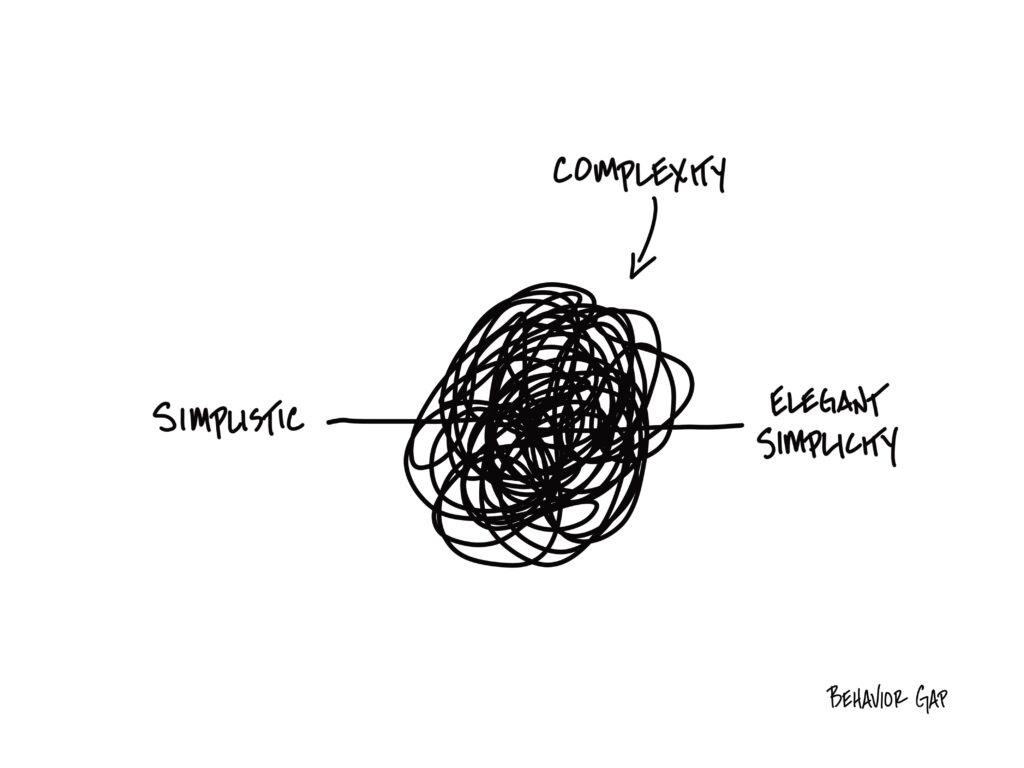
For over 25 years, we’ve helped clients simplify their financial decisions and approach retirement with confidence. Our philosophy is what we call Elegant Simplicity, which helps you see the big picture clearly and make informed decisions without unnecessary complexity.
As a fiduciary, our only goal is to help you make the best possible choices for your future.
You’ll get professional advice that’s accessible, practical, and rooted in decades of experience.
If you are serious about retiring on $750,000, the intro call is the fastest way to get a real answer for your specific situation. On the call, we can tell you whether your number works and what the plan looks like to make it last.
Book Your Complimentary Advisory Call to See if We’re a Good Fit!
We’ll assess your specific situation and determine if it’s the right fit.
This is a no-pressure call where you don’t need to prepare. It’s for folks who want clear direction and answers to their retirement questions. Pick a time that works for you.
Frequently Asked Questions
Can I really retire on 750k?
For many people, yes. A 4% withdrawal from $750,000 is $30,000 a year, and combined with Social Security, that works for many households. The specific answer depends on your spending, your age, and your taxes, which is what a plan is for.
Can I retire on $750,000 and not run out of money?
It’s possible, and a plan protects you. Flexible withdrawals, well-timed Social Security, and tax management all reduce the odds of running short. No plan removes all risk, which is why we review yours every year.
Should I do Roth conversions with $750,000?
For many people at this level, a conversion strategy deserves a close look, especially in the years before Social Security and required distributions begin. The amount matters. Too much in one year can push you into a higher tax bracket and increase Medicare premiums.
Do you have an asset minimum?
Our full-service investment management starts at $250,000 in investable assets. Below that, we offer hourly planning with no minimum. Read more about hourly and flat-fee financial planning.
Do I have to move my accounts to Schwab?
Most clients consolidate there so we can manage everything in one place, but it’s a conversation, not a requirement. If keeping your 401(k) at your employer makes sense, we plan around it.
Are you a fiduciary?
Yes. Focus Planning Group, LLC is an SEC-registered investment advisor, so we’re legally and ethically required to act in your interest.
I don’t live in New York. Can I still work with you?
Yes. We work with clients virtually across the country.