
Is Direct Indexing Worth It?

Direct Indexing

You’ve worked hard and saved well. Now a large part of your wealth is locked up in one company’s stock, or a big sale is coming, and you’re worried about how much of it goes to taxes. You may have heard direct indexing can help, but you want a straight answer from someone who isn’t trying to sell you anything.

At Focus Planning Group, we help people work through whether direct indexing is right for their investments, for individuals who want expert, objective advice without relinquishing control over their finances. Our approach is simple: real financial planning, without sales pitches.

Our approach is simple: real financial planning, without sales pitches.

Why Work With A Fiduciary Before You Make A Move This Big On Direct Indexing

When a large tax decision is on the line, the advice you get often depends on who is giving it. Most firms that offer strategies like direct indexing earn more when you sign up and move your assets to them, so their answer usually leans one way.

We don’t sell a product or manage your money, so we have no reason to push you toward anything. We look at your numbers and give you our honest read, even when it means leaving things alone.

This works well for people who want to stay independent but still want a professional to weigh in before they commit to something with ongoing fees and tax consequences.

What You Can Expect When We Review Your Situation

Every situation is different, but most reviews come down to one question: what is the most tax-efficient move for someone in your position?

Working with us lets you:

  • Get a straight yes or no. We tell you whether a strategy like direct indexing fits your situation, with no obligation to proceed.
  • Get objective advice. No products, commissions, or incentives to say yes.
  • Decide with the math in front of you. We run the cost against the benefit for your specific numbers.

We Help Clients Answer Questions Like

“I’m selling my business next year, and the capital gains are going to be enormous. How do I bring that tax bill down?”

“Half my net worth is in my employer’s stock from RSUs. How do I sell some without getting crushed on taxes?”

“I max out my 401(k) and Roth every year and still have money left over to invest. Where should it go?”

“I’m in the top tax bracket. Is direct indexing worth the higher fee, or should I just buy VOO and forget it?”

“Is direct indexing actually worth it, or is it the gimmick people on Reddit say it is?”

“If I open a direct indexing account, how do I ever unwind it without a giant tax bill down the road?”

How the Process Works

Step 1:

Schedule a Complimentary Intro Call

A quick 15-minute call to learn your situation and see if direct indexing is worth exploring. If it is not a fit, we will say so on the call.

Step 2:

The Evaluation

We run your numbers: your tax bracket, your taxable accounts, your built-in gains, and your timeline. You get a written recommendation on whether direct indexing makes sense for you.

Step 3:

Onboarding

If you want to move forward, we set up your account, build a custom index that avoids any stock you already hold too much of, and sort out how to fund it. We handle the tax details with your accountant.

Step 4:

Ongoing Management

We manage the account for you, run the tax-loss harvesting, monitor and rebalance as needed, and integrate it into your broader plan.

Direct Indexing Case Study

A client came to us after a decade at a company whose stock had done very well. Most of his net worth had ended up in that one position, and he was stuck. He wanted to diversify but couldn’t face the tax bill of selling all at once.

We mapped his tax brackets, his timeline, and a multi-year plan to wind down the position. For his situation, direct indexing made sense as one piece of the plan, alongside a schedule for selling gains in lower-tax years. He left with written recommendations and a plan he could actually follow, with no ongoing fees and no commitment.

We have also run the same review for clients and told them to skip it. For one, a low-cost fund and a simple habit of harvesting losses did everything he needed for a fraction of the cost. Telling someone not to do something is often the most useful thing we do.

Who is Direct Indexing Best For?

  • High earners who max out their retirement accounts and still have money piling up in a taxable brokerage.
  • Anyone with a large gain coming from selling a business, a property, or a block of stock.
  • Employees and executives whose wealth is concentrated in company stock, RSUs, or options.
  • Anyone who has read the back-and-forth online and just wants a straight answer about their own situation.

And just as important, who it is not for: do-it-yourself investors who already hold broad index funds and have no unusual tax situation. If that is you, we will say so, and you will save the fee

See What Our Clients Are Saying About Us

  • Smart Move!

    A few years ago we placed our portfolio in Joe’s care, and its proven to be a good move. Besides being pleased with the performance of the investments, we find Joe is very easy to work with. Responsive/good communicator. Pro-active in reviewing portfolio performance. Benchmarking our results against publicly-available financial indicators.
    Jim B.
    October 24, 2023

Why Clients Choose Focus Planning Group

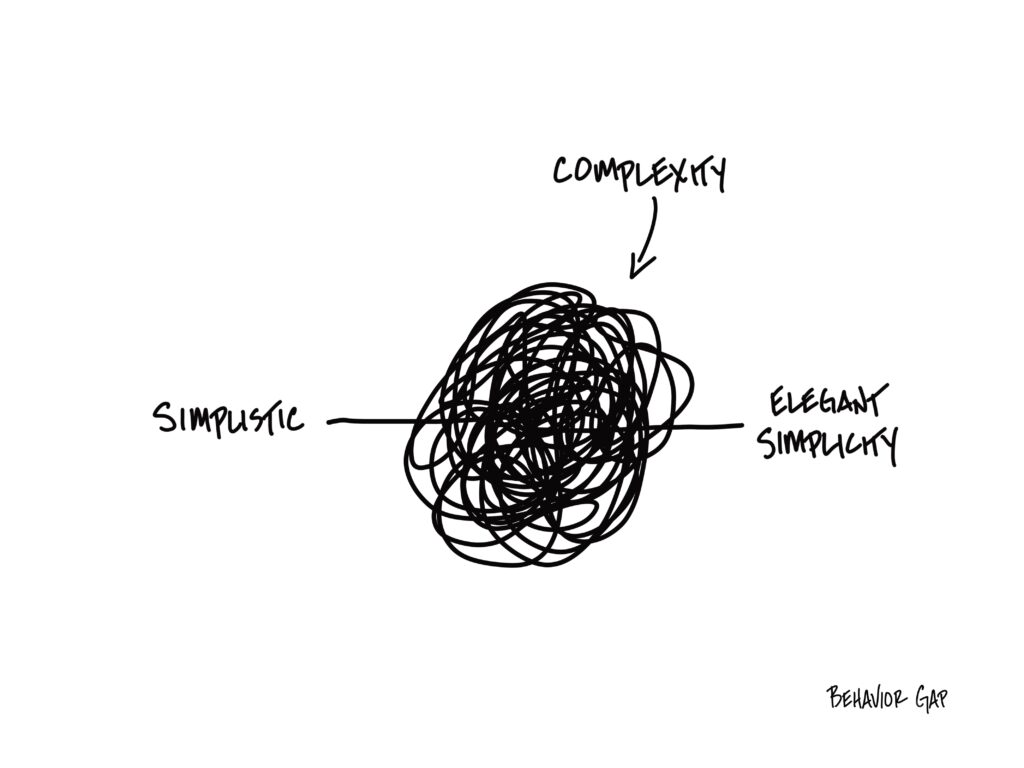
For over 25 years, we’ve helped clients simplify their financial decisions and approach retirement with confidence. Our philosophy is what we call Elegant Simplicity, which helps you see the big picture clearly and make informed decisions without unnecessary complexity.

Direct indexing is a good example of that philosophy in practice. It is a complicated tool that helps only a small number of people, and we would rather help you find out whether you are one of them than sell it to everyone. As a fiduciary, our only job is that.
Joseph Carbone CFP® providing financial advice

Book Your Free Intro Call to See if We’re a Good Fit!

In just 15 minutes, we’ll review your specific situation and honestly tell you whether direct indexing is worth exploring. It’s completely complimentary.

This is a no-pressure call where you don’t need to prepare. It’s for folks who want clear direction and a straight answer. Fill out the form and book a time that works for you.

Frequently Asked Questions

Direct indexing means owning the individual stocks that make up an index, such as the S&P 500, rather than buying a single index fund or ETF. Because you hold each stock yourself, you can sell the ones that have dropped to lock in a tax loss, then buy something similar to keep your overall risk the same. That ability to harvest losses is why people use it. The catch is the added cost and complexity, which only pay off in specific situations.

For most investors, no. A low-cost index fund does the job for far less. It tends to be worth it only for people in high tax brackets with a lot of money in taxable accounts, a large gain on the horizon, or a concentrated stock position, and only when there is a clear plan to exit.

An index fund is one product that holds all the stocks for you. Direct indexing means you hold those stocks yourself, which lets you harvest tax losses on the individual ones that drop. You get more tax flexibility, and you pay more in fees and deal with more complexity to get it.

More than a standard index fund. A plain S&P 500 ETF runs around 0.03% per year, while direct indexing strategies commonly run from about 0.09% up to 0.40% or higher. It only makes sense when the tax savings clearly beat the added cost.

Some firms are purchasing software, running their own models, and incurring the costs.

No, the buying and selling is automated by software. But you can end up holding hundreds of positions over time, which becomes a headache when you want to get out if you never planned for it.

This is one of the most important questions to ask before you start, and the honest answer is that there is no single clean exit. Here are the four most common paths depending on your situation at the time.

Add new money and keep going. If you are still saving, fresh contributions create new tax lots that the software can work with. The older, appreciated positions just sit quietly while the engine keeps harvesting from the newer ones.

Gift the appreciated shares to charity. If you are charitably inclined, this is one of the most powerful moves available. You can identify the individual stock lots with the biggest gains, gift them directly to a charity or donor-advised fund, get a full fair market value deduction, and pay zero capital gains tax in the process. Over time, this quietly cleans up the portfolio.

Stop rebalancing and let it ride. If your tax situation changes- say you retire, drop into a lower bracket, or relocate to a no-income tax state- you can simply turn off the automated engine. Leave the existing positions alone and direct all new savings toward a broad-market ETF like SCHB. Over time, the individual holdings become a smaller slice of your overall picture, and the complexity fades on its own.

Hold it as an estate planning asset. If you never need to sell, this may be the most powerful outcome of all. When your heirs inherit the portfolio, every position receives a step-up in basis to fair market value. All of those embedded gains disappear completely, and your heirs start fresh.

Layer on a long/short strategy. For clients who want to continue harvesting losses even after the portfolio has matured and most positions are sitting on large gains, there is an advanced option worth considering. A long/short overlay allows the software to take short positions in individual stocks alongside your existing long holdings. When those shorted stocks decline, the short positions generate gains. When they rise, the short positions generate losses, creating a fresh, ongoing stream of tax losses unrelated to the appreciated positions already in the account. This approach was pioneered by institutional firms and is now available through platforms like Parametric. It is not the right fit for everyone, but for a client with a large, mature direct index and a high ongoing tax burden, it can significantly extend the portfolio’s tax-harvesting life. This is something we would evaluate together based on your specific situation.

It can be one way to diversify out of a concentrated position while managing the tax hit. Whether it is the right tool depends on your specific gains, timeline, and tax situation, which is exactly what a short review can sort out.

A Section 351 ETF conversion is a relatively new strategy that allows you to contribute a portfolio of individual stocks into a newly created ETF on a tax-deferred basis. Under Section 351 of the tax code, if you transfer appreciated assets into a corporation or ETF structure in exchange for shares, no capital gains tax is triggered at the time of the transfer. You essentially swap your individual stock positions for shares of a custom ETF without writing a check to the IRS.

The key difference from direct indexing is the direction you are moving. Direct indexing starts with a pool of cash and builds individual stock positions to replicate an index, harvesting losses along the way. A Section 351 conversion starts with a portfolio of appreciated individual stocks, often a concentrated position or a legacy direct index, and packages them into an ETF to achieve diversification without a taxable event.

Think of it this way. Direct indexing is the entry strategy. A Section 351 conversion can be the exit strategy.

This matters most for clients who are sitting on a large block of appreciated stock, whether from a long career of equity compensation, a concentrated employer position, or a mature direct index that has become difficult to manage. Instead of selling and paying the tax bill, the shares are placed in the ETF wrapper, and the client receives diversified exposure going forward.

It is worth noting that this remains an emerging area, and the funds available through this structure are limited compared with a traditional ETF menu. It is not the right fit for every situation, but for the right client, it can be a meaningful planning tool. This is something we would walk through together if it appears relevant to your picture.